
Site Kite on the Lena Arcade tower lane
Protocol review · tower filter · checked 20 November 2026 · browser build at /play/site-kite/

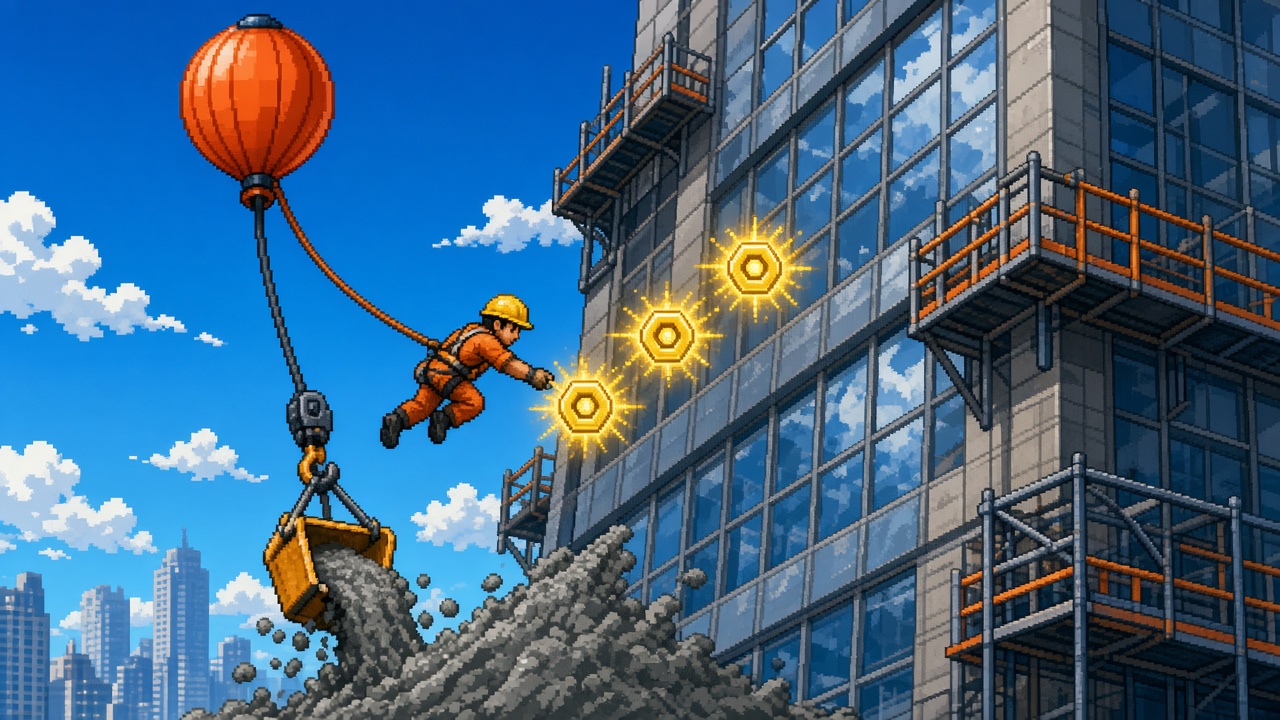
- Developer: Gardvord Games DA
- Genre: Tower Rush / construction · filter tower
- Session: ~20–60 s
- Best for: Dive-release rhythm for gold bolts
- No public store rating — browser build, not a store listing
The protocol records Site Kite as seat NO. 3 on the Lena Arcade ridgepole. The tower lane exists so the shortlist is not only ice. Construction hazards — hooks, beams, concrete — must punish mistimed dives while the balloon tether remains the readable control. This file is a lab log for the HTML5 build at /play/site-kite/, not a store mirror and not a claim about marketplace rank.
Company line: Gardvord Games DA, Rosetvegen 5, 2850 LENA, Norway. Factual challenges: [email protected]. The desk is independent. No public store rating — browser build, not a store listing.
-
Step 1 — Name the tether verb
Check N1 requires a one-line primary verb. For Site Kite the line is “hold to dive, release to recover.” The first successful bolt pickup must follow that verb without a hidden auto-path. On the dated check, the first gold bolt arrived after a deliberate dive-release pair. Accidental pickups that the operator could not restate as tether actions were discarded from the teaching sample.
Lena Arcade tower seats use a shorter session window than ice. Twenty to sixty seconds is the accepted band. Runs outside that band were logged as outliers, not as targets. The shorter band matches the construction-rush pacing observed on the dated pass: pressure rises faster than on the lake seats, so the protocol does not force a forty-five second minimum.
Ice verbs were confirmed absent. No sinker, no hut shove, no under-ice stun radius. That absence is required for filter contrast. A tower build that secretly reused an ice verb would fail N1 even if bolts were collectible.
-
Step 2 — Rhythm samples for gold bolts
Check N2 isolates the best-for claim: dive-release rhythm for gold bolts. The protocol counts successful gold pickups against mistimed releases into beams. When rhythm is even, yield rises. When release is late, concrete and hooks end the run. The correlation supports the ranking tag on the home card.
Sampling method: five intentional runs after a warm-up discard. Gold pickups were marked only when the operator could narrate the dive-release pair that caused them. Random contact with a bolt during a panic flail was logged as noise, not as best-for evidence.
Rhythm does not mean metronome perfection. It means a recoverable cadence the operator can restate. Site Kite cleared that bar. The protocol rejects tower builds where success feels like luck spam rather than cadence.
-
Step 3 — Hazard readability
Check N3 forces contact with hooks, beams, and concrete in separate trials. Each hazard must be nameable after the fail. Silent deaths fail the methodology. Site Kite’s hazards cleared the nameable test on the 20 November 2026 sample. Hooks, beams, and concrete produced distinct narrations rather than a generic “something hit me.”
The tower filter must not recycle ice verbs. Sinkers and hut shoves are absent by design. That absence is why the seat earns contrast value on the ridgepole. Hazard readability without verb recycling is the dual gate for N3.
Soft-lock check: after each hazard fail, Close remained usable and a fresh run could start without a hard refresh. Canvas freezes would fail N3 regardless of how clear the hazard art looked.
-
Step 4 — Contrast against the ice pair
Check N4 asks whether the Lena Arcade shortlist still needs a third seat. Without Site Kite, the ridgepole would be an ice-only list. The protocol keeps the tower lane to prove the desk can host mixed filters without diluting ice checks. Seat order remains ice teaching first, hut second, tower third.
A fourth seat was considered and refused during the same check window because no additional verb cleared the full gate. Length discipline is documented in the ridgepole-length article. This review only confirms that seat three remains justified.
-
Step 5 — Same-origin play and Close
Check N5 opens
/play/site-kite/on this origin and confirms Close returns to the desk. Load behavior matched Mode B local: browser build, no install prompt, no account gate. The desk does not invent downloads or stars for this build.Playtesting disclaimer: builds at
/play/are hosted here for the shortlist check. They are not store binaries. The independence footer on every page applies to this review as well. -
Step 6 — Independence and company line
Company of record: Gardvord Games DA, Rosetvegen 5, 2850 LENA, Norway. The ridgepole is not affiliated with any app store. App names belong to their owners. Browser builds are hosted here for the shortlist check only. Marketplace vocabulary that implies listing strength without data is prohibited in this file.
-
Step 7 — Verdict and expectation
Result: Site Kite holds NO. 3. What to expect: a first dive that misses, a corrected release that takes a bolt, then a hazard fail if rhythm slips. Re-check if session medians leave the twenty-to-sixty second band, if hazards stop being nameable, or if the Close path breaks.
Operators should complete at least one gold-rhythm success and one named hazard fail before treating the seat as fully logged. A bolt streak without a named fail is incomplete evidence under this protocol.
Appendix — Sample log excerpt
Run A: miss dive, recover, gold bolt on second pair, beam fail at ~34 s. Narration: “released late into the crossbeam.” Pass for N1–N3.
Run B: early hook fail. Narration: “held the dive into the hook line.” Pass for hazard naming; incomplete for best-for evidence.
Run C: two gold pairs, concrete graze avoided, end inside sixty seconds. Narration: “cadence held on the upper bolts.” Pass for session band and best-for tag.
Run D: panic flail that brushed a bolt without a narratable release. Logged as noise. The protocol does not promote noise into best-for evidence. That discard rule keeps the Lena Arcade tower tag honest when a later operator re-reads the file.
Across the retained sample, the median intentional run stayed inside the tower band. Outliers above sixty seconds were operator stalls, not required clear times. The ridgepole therefore keeps the twenty-to-sixty second acceptance window unchanged for Site Kite.
Operator notes for the next Lena Arcade re-check
Before a future pass, the protocol will re-time five intentional runs inside the twenty-to-sixty second band, collect at least one narrated gold-rhythm success, and force separate fails on hooks, beams, and concrete. If any hazard becomes a generic collision without a name, N3 reopens. If gold pickups arrive without a restatable dive-release pair, N2 reopens. If ice verbs appear in the tower build, N1 fails immediately.
Seat order will not move Site Kite above the ice pair without a documented change in teaching dependency. The tower lane exists for contrast, not for replacing ice lessons. The dated pass keeps that structure for the Lena Arcade ridgepole.
Absences on the record
Marketplace age labels, IAP ladders, review counts, and download counters were not available. They are omitted rather than guessed. The library date for this review is 2026-11-20. Readers comparing this page to a store listing are comparing different document types; the protocol will not blur them. The phrase used wherever a marketplace figure would otherwise be guessed remains: No public store rating — browser build, not a store listing.